
Global business travel landscape and demand drivers
Current demand and growth trends
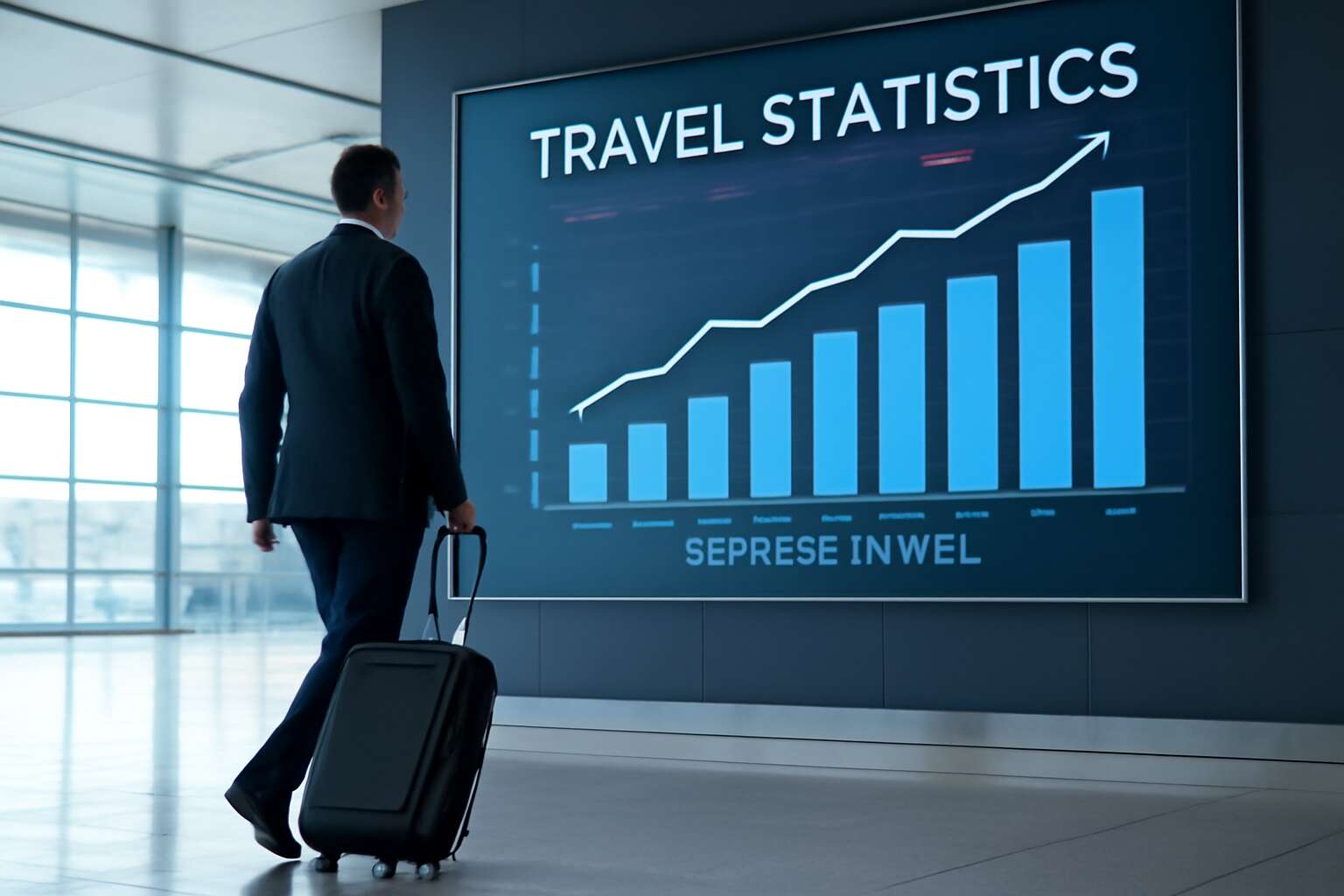
Global corridors hum anew as business travel numbers edge back toward pre-pandemic tempo, hovering around the 85% mark of 2019 levels by mid-2024. For South Africa, that translates into renewed client meetings, site visits, and regional strategy sessions that require human presence.
Current demand is driven by several forces that weave the fate of cities and boardrooms alike. The imperative to seal partnerships, audit supply chains, and co-create with distant teams keeps planes and trains in motion.
- Global trade expansion and supply chain realignment
- Regional growth in Africa, BRICS ties, and inbound investment
- Hybrid work norms steering trips toward purposeful, shorter engagements
Growth trends show a disciplined rebound, with travel programs leaning into duty-of-care, flexible budgeting, and smarter risk management. The result is steadier capacity, more direct routes to Johannesburg and Cape Town corridors, and an existential pull to connect, reflected in the business travel numbers themselves.
Regional demand patterns
Global business travel numbers are writing a proper pre-pandemic sequel, corridors buzzing with purposeful chatter and executives choosing presence over pixels. I watch Johannesburg and Cape Town become lively stages for client reviews, site visits, and strategy catch-ups that demand real-time nuance and a gracious, well-timed handshake. “Presence is the original premium delivery method,” a veteran negotiator reminds me.
Regional demand patterns in Africa tilt toward shorter, purposeful trips that fuse on-site collaboration with decisive momentum. BRICS ties and inbound investment nudge networks closer; new flight connections and visa improvements shrink the gap between plan and signed agreement—reflected in SA hubs’ steadier tempo and the evolving business travel numbers.
- Visa and border processes that glide through intercontinental chaos
- Direct flight corridors strengthening ties into Johannesburg and Cape Town
- Duty-of-care protocols and flexible budgeting that keep trips lean and meaningful
Seasonality and travel cycles
Global business travel numbers move to a seasonal metronome, and South Africa feels the beat in Johannesburg and Cape Town. About 68% of annual deals close in Q4, a punchy reminder that budgets and flight schedules duel for the spotlight. Seasonality isn’t fluff; it’s ROI in real time—leadership reviews, site visits, and high-stakes demos that need tactile context and a well-timed handshake to seal the deal.
Seasonality and travel cycles are steered by a handful of reliable forces and a few stubborn quirks. Consider the usual stage directions of seasonality:
- Fiscal-year endings and procurement cycles pushing trips into the final stretch
- Conferences and product launches turning cities into temporary HQs
- Budget calendars, visa windows, and holiday patterns that trim or magnify demand
These rhythms explain the wobble and wonder in business travel numbers, as firms choreograph presence with prudence and a dash of bravado.
Impact of macroeconomic factors
Global business travel numbers are climbing, with industry trackers noting a double-digit uptick in cross-border trips this year. The trend carries a stubborn pulse: companies invest in key meetings, site inspections, and the brief moments of face-to-face that keep deals honest.
- Currency swings and fuel price volatility that tilt trip budgets
- Global growth cycles and corporate capex influencing travel demand
- Policy clocks—visa windows, travel restrictions, and testing regimes
Here in South Africa, rand volatility, visa windows, and major regional conferences tilt the scheduling scales for Johannesburg and Cape Town teams alike. The heartbeat of global demand echoes through our airports and boardrooms, stitching together resilience with opportunity in the busiest corridors of business travel.
Post-pandemic normalization and new norms
Global business travel numbers have surged back to life, with trackers reporting a double-digit rise in cross-border trips this year. Post-pandemic normalization has not erased caution; it has reoriented priorities toward essential meetings, site inspections, and the moments of face-to-face that keep deals honest.
That shift is powered by a blend of necessity and opportunity. In-person conversations still clinch complex contracts, while streamlined itineraries and shared-risk policies squeeze more value from every trip. I watch the lanes of global hubs shift as decision-makers tilt toward certainty.
- Strategic alignment through critical face-to-face engagements
- Rationalized itineraries for risk and cost control
- Regional hubs fuelling cross-border city-pair demand
That rebound in business travel numbers finds resonance in Johannesburg and Cape Town boardrooms, where strategy meets runway pragmatism. In South Africa, policy timing and major regional conferences subtly steer when teams book trips, showing how the global rhythm threads into local schedules.
Costs, budgeting, and ROI for travel programs
Avg trip costs by region and purpose
Costs, budgeting, and ROI in travel programs hinge on a single, merciless truth: Avg trip costs by region and purpose can diverge by up to 18%. That gap turns a routine itinerary into a strategic lever, influencing supplier negotiations, hotel tiers, and flight classes. When the same trip costs markedly differently across geographies, clarity emerges, demanding respect for regional price realities while preserving policy integrity.
- Domestic and short-haul trips (local meetings, site visits)
- Regional cross-border travel (Africa-wide routes)
- International conferences and long-haul missions
Budgeting isn’t about austerity; it’s about letting the numbers speak. Across business travel numbers, ROI becomes visible when cost patterns align with approved policies and vendor agreements, yielding a steadier financial arc and a clearer map of value across the program.
T&E policy and budgeting best practices
In South Africa, business travel numbers tell a paradox: clarity in budgeting yields ROI more reliably than blunt cost-cutting. A thoughtful T&E policy turns ordinary itineraries into strategic levers—shaping supplier talks, hotel tiers, and flight choices with intent.
Budgeting isn’t austerity; it’s a map of costs aligned to approved policies and vendor terms. When spend centers, approvals, and category rules stay in step, ROI reveals itself as predictable cash flow and a cleaner value picture across the program.
- Policy-driven spend limits that are easy to track
- Transparent approval workflows that speed decision-making
- Preferred vendor panels that unlock volume discounts
In SA boardrooms and back offices alike, policy and practice finally align, and value becomes visible.
ROI metrics for travel programs
In South Africa, business travel numbers reveal a paradox: clarity in budgeting yields ROI more reliably than blunt cost-cutting. Costs become navigable signposts, shaping hotel tiers, flight choices, and meeting schedules with clear intent!
- Cost per trip and total cost of ownership across the program
- Policy adherence and cycle-time for approvals
- Vendor terms utilization and volume discounts
ROI metrics for travel programs convert expense into insight: measured savings, timely decision-making, and stronger vendor terms that compound over the life of contracts. In South Africa, policy and practice align, turning business travel numbers into steady cash flow rather than a murky cost line.
Vendor negotiation and cost-saving strategies
In a year when a single late approval can derail a trip, business travel numbers reveal a counterintuitive truth: clear budgeting delivers ROI with more staying power than blunt cost-cutting. “Budget clarity is the secret currency of travel ROI,” a colleague likes to say, and the line sticks like a compass needle.
Costs, budgeting, and ROI converge into a narrative where every line item becomes a signal—flight class chosen for purpose, hotel tier aligned to meeting cadence, and meeting schedules timed for minimal friction. When policy and practice keep pace, approvals move with a smooth rhythm, and vendor terms start to feel like leverage rather than friction.
- Transparent cost structures that illuminate the total cost of ownership across the program
- Contract terms that reward predictability and consistent T&E budgeting horizons
- Vendor relationships built on clarity, helping to surface discounts and reduce hidden fees
Traveler behavior, risk, and experience
Traveler preferences and behavior changes
The pulse of business travel numbers quickens, and South African travelers prize reliability, safety, and swift problem-solving above all! Risk is a design principle—pre-trip checks, clear protocols, and trusted partners shape every itinerary, while delays sharpen expectations for seamless transfers.
Traveler preferences have shifted toward concise, flexible trips and high-quality digital experiences. Many execs favor plans that bend on short notice, with real-time updates and quiet, work-friendly spaces en route.
- Flexibility in start and end times for meetings
- Reliable connectivity and quiet work zones
- Transparent, proactive risk and disruption alerts
Experience matters, too—sleep quality, airport comfort, and empathetic service become differentiators as travelers balance risk against productivity. Loyalty programs and local partnerships increasingly influence choices, shaping the arc of travel demands as schedules tighten.
Booking channels and tech adoption
South Africa’s business travel numbers reveal a quiet revolution: trips are shorter, sharper, and more connected than a year ago. Reliability and speed are the currencies, not price alone. I hear executives weigh risk calmly—pre-trip checks, trusted partners, and clear protocols shaping every itinerary, while delays become opportunities for seamless transfers!
Booking channels and tech adoption have moved from convenience to obligation. Travelers seek transparent options and instant reassurance across every stage.
- Direct corporate portals
- Travel management companies (TMCs)
- Mobile apps with offline access
- Online travel platforms offering real-time fare and schedule clarity
On the ground, risk is managed through real-time disruption alerts, flexible rescheduling, and quiet, work-friendly spaces en route. Experience—sleep quality, airport comfort, and empathetic service—has become the differentiator as schedules tighten and productivity remains the measure of success.
Policy compliance and fatigue
South Africa’s business travel numbers reveal a quiet revolution: trips are shorter, sharper, and more connected than a year ago. Executives prize reliability and speed over price, trading long layovers for seamless transfers and pre-approved itineraries.
Traveller behavior now blends urgency with prudence. Pre-trip checks, trusted partners, and clear protocols shape each itinerary, while fatigue becomes a risk factor to be managed, not a surprise. When a hiccup hits, the response is calm: quiet work spaces, real-time disruption alerts, and flexible rescheduling keep momentum without breaking focus.
Policy compliance sits at the heart of the journey, turning every booking into a measured act of accountability. The experience—sleep quality, airport comfort, empathetic service—emerges as the differentiator when schedules compress and productivity is the metric.
Travellers also appreciate these programmatic touches:
- Real-time disruption alerts
- Flexible rescheduling
- Quiet, work-friendly spaces en route
Duty of care and traveler safety
In South Africa, business travel numbers signal a quiet revolution: trips are lean, decisions swift, and risk kept in check. I see executives prioritising reliability over price, choosing pre-approved itineraries and seamless transfers that keep momentum steady even when the horizon is tight.
Fatigue has become a measurable risk, not a surprise. Pre-trip checks, trusted partners, and clear protocols shape every itinerary, with duty of care at the core. A calm toolkit keeps travelers safe without slowing the clock.
- Proactive disruption signaling
- Adaptive scheduling options
- Secure, quiet spaces en route
The experience—sleep quality, cabin comfort, empathetic service—emerges as the differentiator when time compresses and productivity is the metric. When things shift, calm, real-time updates and humane support preserve focus and purpose!
Sustainability considerations and reporting
Traveler behavior in a tighter market follows a quiet rhythm: deliberate bookings, lean itineraries, and a preference for reliability over price. Fatigue remains a measurable risk; travelers expect pre-trip checks, trusted partners, and calm transfers that keep momentum. In the evolving landscape of business travel numbers, decisions stay swift and stress is mapped to clear protocols, not surprises.
To balance risk with responsibility, sustainability considerations and reporting thread through every itinerary:
- Emissions tracking, carbon offsetting, and alignment with travel policy
- Sustainable vendor credentials and local sourcing where possible
- Transparent dashboards for environmental impact and ROI metrics
Experience becomes the differentiator when time is scarce. As these business travel numbers evolve, travelers crave humane support, sleep-friendly cabins, and real-time updates that respect both people and planet.
Mobile experiences and productivity on the road
In the latest snapshot of business travel numbers, 68% of South African travelers prize reliable connectivity over price. Behavior leans toward deliberate bookings and lean itineraries; fatigue remains a risk, and pre-trip checks with trusted partners help preserve momentum.
On the road, risk is mapped by clear protocols that outpace surprises. A compact set of enablers keeps travelers calm and productive:
- Real-time updates and offline itineraries
- Secure mobile workflows for approvals
- Quiet, sleep-friendly spaces that sustain momentum
Experience becomes the differentiator when time is tight! Real-time updates, calm transfers, and humane support shape the on-road experience. The focus shifts to intuitive apps, simple dashboards, and sleep-friendly cabins along the Cape Town to Johannesburg corridor.
Data, benchmarks, and industry sources
Key data sources and benchmark metrics
The pulse of business travel numbers is beating a little louder this year, with double-digit upticks in trips across local corridors, and in South Africa the rhythm carries boardroom ambition and the quiet ache of cities waking to new opportunities. I watch it in the airport lounges and in the boardroom, a quiet optimism rising.
Data, benchmarks, and industry sources illuminate the path forward.
- GBTA BTI for spend and trip volume
- WTTC economic impact and traveler segments
- Stats SA and SA Tourism for domestic versus international patterns
- Booking data from Amadeus, Sabre, and Travelport
- Benchmark metrics: lead time, trip duration, spend per trip, policy compliance, traveler satisfaction
These sources render a precise picture of business travel numbers in the South African market, where aspiration meets data and memory becomes forecast.
Interpreting benchmarks by industry and region
The data pulse is sharper this year, and the numbers do not lie: business travel numbers are rising, with double-digit upticks across local corridors that hint at boardroom ambition waking the cities. The glow of airport lounges and glass-walled boardrooms feels like a quiet omen whispered by oracle datasets threading through every itinerary.
Interpreting benchmarks by industry and region reveals who benefits from the shift and where friction remains. Lead times vary by sector; trip duration and spend per trip shift with regional cycles. Policy compliance and traveler satisfaction become diagnostic lenses shaping program design.
Relying on GBTA BTI data for spend and trip volume, WTTC, Stats SA, SA Tourism, and booking data from Amadeus, Sabre, and Travelport, we triangulate the terrain and translate numbers into insights.
- Industry-specific lead times and trip aims
- Regional variance in spend and traveler mix
- Benchmark anchors: lead time, trip duration, policy compliance, traveler satisfaction
Methodology, reliability, and data limitations
From Cape Town’s bustling corridors to Johannesburg’s skyline, business travel numbers carry a quiet charge. Early data show a double-digit uplift in regional spend and trip volume, turning whispers of growth into boardroom momentum.
Methodology relies on triangulation: GBTA BTI data for spend and trip volume, WTTC, Stats SA, SA Tourism, and booking data from Amadeus, Sabre, and Travelport. Reliability hinges on consistent definitions and timely updates, while data limitations—lag, partial sector coverage, currency shifts, and regional reporting gaps—temper interpretations of the curve.
- GBTA BTI data for spend and trip volume
- WTTC and Stats SA regional indicators
- SA Tourism and Amadeus, Sabre, Travelport booking data
- Cross-checking and timeline alignment to ensure comparability
Strategic priorities for future-ready travel programs
Digital transformation and platform integration
The latest business travel numbers reveal resilience even as budgets tighten and executive scrutiny sharpens. In South Africa, we are not chasing fads but building programs that endure—where data, policy, and traveler experience align to unlock predictable outcomes. Our compass points to future-ready travel programs, where strategic priorities are defined not by today’s whim but by tomorrow’s needs, and where digital transformation sits at the core.
Digital transformation and platform integration become the scaffolding for this future. Priorities include:
- Coordinated data hubs and seamless policy enforcement
- Open APIs that connect suppliers, travelers, and finance
- Real-time analytics that translate spend into strategy
With these elements in place, we anticipate a steadier voyage through ever-shifting demand.
Policy evolution for future travel
Across South Africa, business travel numbers have shown a stubborn resilience even as budgets tighten—a 7% uptick in travel volumes last quarter hints that demand holds steady where margins are strained! In that tension, policy must evolve, not stagnate, guiding journeys with clarity and care.
Policy evolution for future travel begins with governance that moves with the speed of change and data that informs every decision.
- Adaptive approvals that balance risk with traveler autonomy, anchored in spend controls
- Compliance frameworks that harmonize privacy, supplier risk, and regulatory nuance
- Scenario planning that informs budgeting using real-time indicators to anticipate shifts
For those tracking travel numbers, the trajectory points to efficiency, predictability, and a partner-ready ecosystem where governance, traveler experience, and measurable value converge.
Risk management, resilience, and crisis response
From the bustling atriums of Johannesburg and Cape Town, a 7% uptick in business travel numbers last quarter shines like a beacon in a cautious economy. In South Africa, that momentum demands governance that moves as quickly as change and strategies that turn data into decisive action. These priorities—risk management, resilience, and crisis response—form the steel spine of every itinerary and partnership.
Key elements in the resilient playbook include:
- Real-time risk indicators that translate signals into swift decisions
- Crisis response playbooks and regular drills to sharpen readiness
- Clear traveler communications that safeguard privacy while enabling timely support
In South Africa, these tactics translate into steadier corridors for corporate teams and suppliers alike. When risk, resilience, and crisis response are woven into travel programs, business travel numbers become a measured journey rather than an uncertain sprint.
Supplier relationships and AI-driven personalization
Across South Africa, business travel numbers are ticking up, with the latest quarter delivering a 7% uptick—proof that cautious optimism can translate into deliberate, value-led choices. The strategic priorities for future-ready travel programs center on two pillars: supplier relationships and AI-driven personalization. Strong supplier partnerships unlock predictable costs, reliable service, and collaborative risk sharing—keys in a volatile climate.
- Establish transparent SLAs and collaborative planning with key suppliers to align on traveler needs and risk management.
- Leverage AI-driven personalization to tailor itineraries, deliver real-time options, and streamline approvals for travelers.
In practice, this blend turns data into decisive action, creating smoother corridors for teams and suppliers while maintaining governance and traveler experience at the fore. That balance between human intent and algorithmic insight gives travel programs a steadier rhythm—more journey than sprint.


0 Comments